Will the 2026 FIFA World Cup light brighten the future of USL and lower-league soccer in the U.S.? I posed the question in the title, and it can be answered in one simple word: no.
At least, that is my educated opinion: the 2026 FIFA World Cup will not be the catalyst for the success of American lower-league soccer. Due to the saturation of soccer in the United States and, let’s be honest, the number of sports available to watch daily, lower-league soccer cannot thrive on a large scale in the country. That isn’t to say lower-league soccer cannot exist and have a place within the American sports landscape.
Let’s start with this: there is no promotion and relegation within the United States soccer pyramid, at least not yet. The USL will implement promotion and relegation in 2028; however, a lot must happen between now and then, and I don’t see the system actually being implemented to the level everyone expects.
There is too much money at stake for people buying teams in the USL. Current expansion fees start at $20 million. Sure, that isn’t as much as the ridiculous fees MLS asks for, since those expansion fees help prop up the league—multi-level marketing—but I’m sure neither you nor I has $20m lying around to buy into the USL Championship.
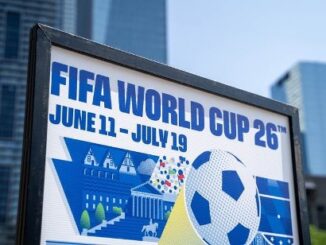
The 2026 FIFA World Cup was sold to American soccer fans, cities, and soccer clubs as a great way to increase interest in the sport and the country. I’ve already covered in previous articles just why that isn’t true or happening. Tourism won’t be as big as FIFA promised, and the greater interest from American sports fans will flicker and fade after the tournament. If anyone is going to get more interest, it will be MLS, the king of soccer in the United States and Canada—whether it should be or not.
Cast your mind back to November 2001. MLS folded. The financial losses were too large, and owners wanted out of the league. However, Lamar Hunt is credited with saving the league at the 11th hour, talking owners into giving it one last go.
Surely Hunt told the owners about the World Cup scheduled for the next summer. In true Hollywood form, the USMNT reached the quarterfinals in South Korea and Japan, increasing interest in soccer in the country. Fast forward to October 2002, and over 61,000 fans showed up at Gillette Stadium for the MLS Cup Final between the LA Galaxy and New England Revolution. So you see, dear reader, miracles do happen.
But in the case of lower-league American soccer, I don’t believe in miracles. I’m cynical when it comes to soccer in America. It is a sport that many say is the fourth most popular behind the NFL, NBA, and MLB. I disagree.
The domestic soccer leagues fall somewhere behind those three, along with the NHL, WNBA, and NASCAR. MLS released data in March 2026 stating they had 7.9 million live match viewers per week. That’s a great number until you break it down. That’s an average of 526,666 fans viewing per game across all platforms. I hate to break it to MLS, but NASCAR gets up to 3 million rednecks watching on all platforms per race.
In 2025, the WNBA averaged 1.3 million viewers per game thanks to live broadcasts on ESPN and ABC. This is part of MLS’s problem. At the time when the league had the opportunity to be the most-viewed it had ever been, to have the biggest player in the world playing in it, and to attract better players than ever, Don Garber and his cronies went behind the Apple paywall. Rather than make the league as visible as possible, MLS chose to attract only the most ardent domestic soccer fans.
It is a mistake few are talking about at this time, because the expectations are—wrongfully—that MLS will become a major player in world soccer thanks to this summer’s World Cup, Lionel Messi, and the change in the calendar format. I could be wrong. I’m a cynical bastard. So, if MLS can’t capitalize on all of these elements, how in the hell is the USL or other lower leagues going to increase visibility and keep clubs from going out of business?
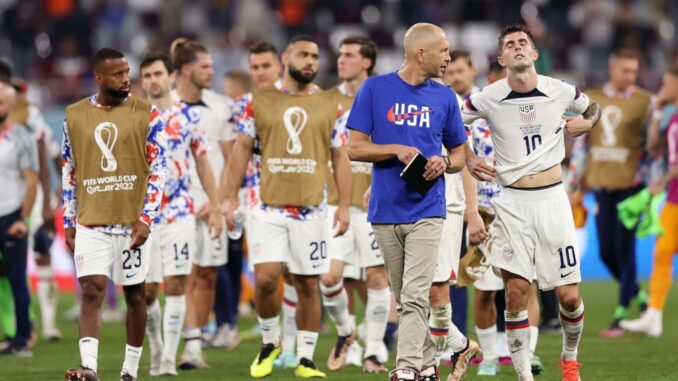
Yet I can’t see MLS capitalizing on anything currently happening with the World Cup. The best MLS can hope for is the USMNT winning the tournament, which could happen with the current government and little Gianni—once made fun of for his red hair—pulling all the strings. The last thing anyone wants is an FBI Director showing up in the USMNT’s dressing room and acting like a fanboy, as if he just won the tournament alongside the players.
Soccer in the U.S. is like trickle-down economics. The rich and most powerful make all the money and spend it; then the poor must hope they get a sliver of the pie—the American Dream. Trickle-down economics is like the feudal systems of the past: land, money, and power in the hands of a select few, with the rest of us, the peasants, working for peanuts, hoping the rich and powerful will help and protect us.
MLS is the wealthy, and the USL is the peasants. Okay, maybe this sounds too harsh. Perhaps it’s too Noam Chomsky.
The lower leagues, no matter how many try, can’t compete with MLS. They need to carve out their own niche. These clubs need to become what MLS clubs and other American sports teams are not: the heartbeat of their communities. The U.S. sports landscape has become one of (mostly) super-rich athletes with a separation between themselves and fans. The average MLB player’s salary is over $5.34 million per season. The average NFL player earns $5.2 million a season. The average NBA player makes around $11 million a year.
The USL Championship average annual player salary is between $40,000 and $50,000. It is a league capable of developing players to move on to bigger leagues. It is a competition for players to play, earn a living, and have a professional soccer career.
Are they going to get rich? No. However, they are going to get to enjoy playing professional soccer and earning money for doing it. Are the standards in the USL’s divisions as high as MLS or other leagues around the world? No, but I can say they are a hell of a lot better than what I’ve seen elsewhere as a fan, journalist, player, and coach.
There are teams in the lower leagues of U.S. soccer doing it right. Portland Hearts of Pine are crushing it. However, with teams folding left and right due to financial issues, it’s difficult to see the lower leagues of American soccer truly benefiting from the 2026 FIFA World Cup in the long run. Sure, you may get a short-term spike in attendance this summer, but the vast majority of these teams won’t attract any new fans.
Why? Americans will watch World Cup games featuring some of the best players in the world at massive stadiums before 60,000 fans. The lower leagues can’t keep American sports fans engaged once they’ve seen the top level. American sports fans are taught that their leagues are the best in the world. Their teams are world champions without having to play teams from other countries.
Lower-league American soccer cannot compete on these levels. The pitches are often at local high schools or universities and have gridiron lines. The quality isn’t as high, especially compared to what fans will see at the World Cup. The marketing isn’t as on brand. If anything, the 2026 FIFA World Cup will have the opposite effect on the lower leagues of American soccer. Of course, I’m a cynical bastard, but I’m often not wrong.