Well, that escalated quickly.
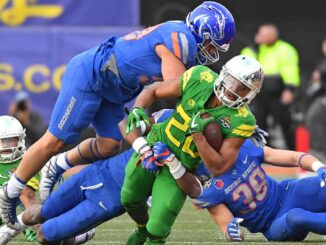
Actually, scratch that. Oregon’s problems didn’t escalate quickly. They were sitting there in plain sight a week ago against Boise State, and Oklahoma State made the Ducks pay for them.
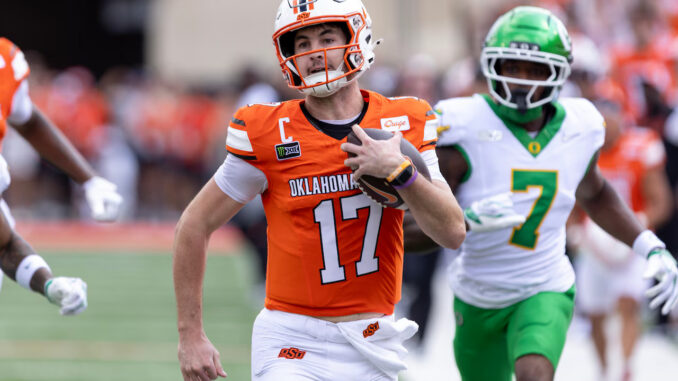
No. 6 Oregon went to Stillwater on Saturday looking for a much cleaner performance after an uneven season opener. Instead, the Ducks suffered a stunning 39-31 loss to an Oklahoma State team that had dropped 21 straight games against FBS opponents. Just a year earlier, Oregon beat these same Cowboys 69-3 in Eugene.
That’s quite the 12-month plot twist.
The loss drops Oregon to 1-1 and raises real questions for a team that entered the season thinking about Big Ten titles and another run at the College Football Playoff. Here are three takeaways from a Saturday the Ducks won’t want to revisit anytime soon.
1. This wasn’t some weird, fluky upset. Oregon got outplayed.
College football produces strange upsets all the time. A favorite throws three interceptions, gives up a kick return, misses a field goal, and loses a game despite controlling almost everything else.
That’s not what happened to Oregon. Oklahoma State was simply the better football team for much of Saturday.
The Cowboys outgained the Ducks 554-281, finished with 25 first downs to Oregon’s 12 and rushed for 237 yards. Oklahoma State also ran 83 offensive plays to Oregon’s 59 and held the ball for 36:54. The Cowboys produced seven offensive plays of more than 20 yards, while Oregon managed only two.
Those are not “one bad bounce” numbers. Those are “you have some things to fix Monday morning” numbers.
Oregon’s defense actually created the plays that kept the game manageable early. Devon Jackson returned an interception 96 yards for a touchdown, then Matayo Uiagalelei picked off another pass and returned it to the Oklahoma State 1-yard line, setting up Jordon Davison’s touchdown.
Without those plays, this game could have gotten ugly in a hurry. Oklahoma State outgained Oregon 353-101 in the first half, yet the Ducks somehow went into halftime trailing only 24-17.
To Oregon’s credit, it fought back. Dante Moore’s 38-yard touchdown pass to Evan Stewart on the first play of the fourth quarter gave the Ducks a 31-30 lead and briefly made it look as if Oregon might escape Stillwater.
Oklahoma State didn’t panic. The Cowboys responded with a 12-play, 75-yard touchdown drive that took 4:30 off the clock and put them back ahead for good.
That’s one of the most concerning parts of the loss. When the game reached the moment when a championship-caliber team usually takes control, Oklahoma State took control instead.
Dan Lanning pointed afterward to problems at the line of scrimmage, tackling, and Oregon’s inability to prevent explosive plays. Those concerns mattered even more because several of them had already appeared in the opener against Boise State.
One shaky performance can be dismissed as an early-season hiccup. Two straight weeks start looking less like a hiccup and more like a trend.
2. Oregon’s offense has way too much talent to look like this
At times, Dante Moore and Oregon’s offense looked dangerous. Moore threw for 191 yards and two touchdowns, including a 36-yard strike to Dakorien Moore in the third quarter and the 38-yard touchdown to Stewart that briefly gave Oregon the lead.
The problem was everything in between. Oregon finished with only 281 total yards, including 90 on the ground, and converted just five of 14 third downs. The Ducks also went 0-for-3 on fourth down.
Those numbers become even more concerning when you consider how much help the offense received from the defense. Oregon’s first touchdown came directly from Jackson’s interception return, while its second began at the Oklahoma State 1-yard line following Uiagalelei’s interception.
In other words, Oregon’s offense didn’t exactly spend the first half marching up and down the field. The Ducks had only 101 yards of offense before halftime and still somehow remained within seven points.
The biggest decision came with Oregon trailing 36-31 and facing fourth down from its own 33-yard line with 6:48 remaining. Lanning elected to keep the offense on the field; Oregon failed to convert, and Oklahoma State took advantage of the short field by kicking a field goal to extend its lead to eight.
It’s easy to criticize a fourth-down decision after it fails, especially with a coach as aggressive as Lanning. The bigger problem is that Oregon’s offense spent so much of the afternoon putting itself in difficult situations in the first place.
The Ducks still had another chance after getting the ball back with 3:11 remaining. A fumbled pitch between Moore and Dierre Hill Jr. ended that opportunity and essentially ended the game.
Oregon has too many talented skill players for the offense to operate this inconsistently. The Ducks have Portland State next, which gives them a chance to work on timing, rhythm, and execution before the Big Ten schedule begins.
And simply hanging a giant number on Portland State won’t answer every question. Oregon needs to look comfortable and connected again, not merely more talented than the team standing across from it.
3. The defense’s explosive-play problem is now impossible to ignore
If there’s one number Oregon’s defensive staff might see in its sleep this week, it’s 554. That’s how many yards Oklahoma State piled up against a Ducks defense that entered the season with expectations of being one of the country’s better units.
Quarterback Drew Mestemaker threw for 317 yards and two touchdowns while also rushing for 109 yards and another score. Running back Caleb Hawkins added 110 rushing yards, giving Oklahoma State both a 300-yard passer and two 100-yard rushers in the same game.
The warning signs appeared almost immediately. Mestemaker ripped off a 75-yard run on Oklahoma State’s first offensive play, putting Oregon on its heels before the game had really settled in.
The Ducks recovered and held Oklahoma State to a field goal on that possession, but the big plays didn’t stop there. Oklahoma State finished with seven plays longer than 20 yards, including a 52-yard touchdown pass to Wyatt Young in the second quarter.
Oregon did make two tremendous defensive plays with the interceptions from Jackson and Uiagalelei. Those turnovers gave the Ducks a chance to win in the fourth quarter despite being thoroughly outgained.
But a defense can’t depend on turnovers to erase everything else. Eventually, you have to make an opponent drive the field the hard way, win tackles and get off the field.
Oregon couldn’t do that often enough Saturday. The Cowboys ran 83 plays, scored on seven of eight red-zone opportunities and controlled the ball for nearly 37 minutes.
That’s particularly troubling because Oregon wasn’t exactly flawless defensively against Boise State, either. Lanning specifically said after Saturday’s loss that tackling and play in the trenches remained concerns from the first game to the second.
The season, of course, isn’t finished after two games. Oregon hasn’t even played a Big Ten game yet, so every conference goal is still sitting there waiting for the Ducks.
The College Football Playoff isn’t out of the question, either. But Oregon has used up a significant portion of its margin for error before September has reached its halfway point.
More importantly, the Ducks need to worry less about playoff math right now and more about fixing what has happened through the first two weeks. For most of the Dan Lanning era, Oregon has dictated the physical tone, produced explosive plays, and forced opponents to keep up.
On Saturday, Oklahoma State played that role.
And after two shaky performances to open the season, Oregon’s biggest question isn’t where the Ducks fall in the rankings. It’s how quickly they can start looking like themselves again.