
The Portland Trail Blazers aren’t easing into their next phase.
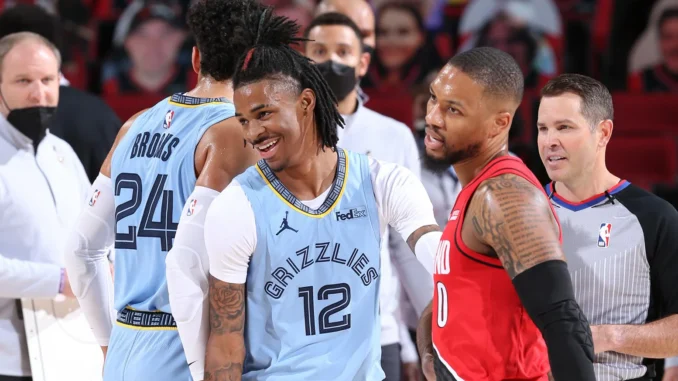
After reaching the playoffs at 42-40 last season, Portland acquired Ja Morant, welcomed back Damian Lillard into the rotation, and hired Micah Nori as head coach. The result is a fascinating roster with real upside, notable injury risk, and, of course, approximately 47 guards ready to play.
Plenty of reasons for optimism, but plenty of questions to answer.
Here are the five biggest questions facing the Blazers entering training camp.
1. How Will All These Guards Fit Together?
The Blazers reportedly envision Lillard and Morant both in the starting lineup. Figuring out how that comes together will be one of coach Nori’s first puzzles.
Both guards can stretch a defense in different directions. Lillard has teased his comeback with three-point shooting videos. It feels like he’ll threaten to lead the league in deep balls this season, all while Morant breaks down opposing coverage with iso attacks—especially if his athletic decline proves mostly exaggerated.
But Portland also needs to decide who controls the offense. Morant is at his best attacking with the ball, but Lillard has spent his career brilliantly orchestrating pick-and-roll sets. Deni Avdija has also broken out after getting more playmaking responsibility. And then, of course, Scoot Henderson and Jrue Holiday expect to be playmakers for stretches as well.
There are enough minutes to go around, and that’s even truer with Shaedon Sharpe’s offseason injury. Finding the right distribution of touches will be harder, though. And it will be the main thing everyone watches in training camp, preseason, and early in the year.
2. What Does Damian Lillard Look Like?
The emotional part of Lillard’s return is easy. The basketball part remains uncertain.
Lillard missed the entire 2025-26 season while recovering from a torn left Achilles. His health track record started to take a hit years ago (though some of that was team-induced by tanking), and now, at 36, it’s unlikely he can carry an offense like before.
Luckily for Lillard, he shouldn’t have to. Squint just enough and that crowded backcourt starts to look like a luxury. Avdija’s usage will likely dip from last season, but the Blazers want and need the ball in his hands, taking even more pressure off of Lillard.
All of that should help. Morant and Avdija can create advantages, allowing Lillard to conserve energy and weaponize his shooting away from the ball. Embracing the catch-and-shoot deep ball will go a long way for Lillard this season, especially if he can add a Stephen Curry-esque “relocation” shot.
Still, training camp and preseason should reveal how much explosiveness he’s recovered, whether he can withstand regular defensive minutes, and what workload the Blazers consider realistic.
Portland doesn’t need vintage Dame every night. It does need a version opponents still fear.
3. What Does Shaedon Sharpe’s Absence Mean for the Blazers?
Sharpe’s torn right meniscus removed another scorer from an offense that already traded Jerami Grant to Memphis. The 23-year-old averaged a career-high 20.8 points last season, but he will be re-evaluated six months after surgery. That timeline puts most of his regular season in jeopardy.
At this point, Portland has plenty of ball-handling without him. Replacing his size, athleticism, and scoring is another matter.
Camara may need to shoulder a larger offensive role. Scoot should receive more second-unit opportunities. Vit Krejčí and Sidy Cissoko could compete for wing minutes that appeared unavailable before Sharpe’s injury.
Unfortunately, the bigger question is what this does for Sharpe’s development after a career year, albeit one that also saw his jump shot waver, his defense come and go, and his minutes vanish in the playoffs.
Sharpe has always been something of an enigma for this team. His latest injury only supports that.
4. Is Deni Avdija Healthy Enough to Lead the Team?
Avdija’s emergence changed Portland’s trajectory last season, and now the Blazers need to determine whether that production can coexist with Morant and Lillard.
First, though, they need him healthy. Avdija described the back injury that kept him from representing Israel over the summer as “complex,” creating at least some uncertainty entering camp.
If you’ve ever endured a back injury, you know you don’t mess around. Not even professional athletes are immune, and when you’re quite literally an All-Star whose health is crucial to the team, you really don’t mess around.
5. What Changes Under Micah Nori?
Nori inherits a talented team with a glaring problem: Portland committed an NBA-high 1,418 turnovers last season.
Their 16.1 turnovers per game was a full 1.4 more per game than the 29th-ranked Washington Wizards. For context, that same 1.4 turnover-per-game difference separated Washington and the No. 15-ranked Sacramento Kings.
Ouch, Blazers. Very, very ouch.
Better organization both on and off the ball should be the immediate priority. Lillard’s return gives the Blazers another stabilizing decision-maker, but Morant and Avdija are aggressive creators who naturally invite some volatility.
Nori must also determine how much continuity to preserve from last season’s defensive identity. Camara, Holiday, Donovan Clingan, and Robert Williams III give him the personnel to build another disruptive unit, but he may need to mask his starting backcourt’s weaknesses.


