Vancouver dominates possession and capitalizes on Portland’s mistakes as Phil Neville’s side suffers its most concerning result of the MLS season.
It is easy to look at Portland Timbers’ 4-1 loss to the Vancouver Whitecaps and say, “Well, that was just awful.” On the surface, you would be correct. But take a deeper dive into Portland’s MLS week 3 loss to Western Conference rival Vancouver, and you’d actually say, “That was the worst result imaginable.”
Excuse the hyperbole, but this wasn’t simply a bad night at Providence Park. It was a performance that raised real questions about what this Portland team actually is. After the opening-day 3–2 win over the Columbus Crew, fans were briefly convinced that head coach Phil Neville had removed the restraints and unleashed an attacking, front-footed team.
Three weeks into the season, that early optimism looks increasingly fragile. With the benefit of hindsight, Portland’s opening-night win may have said more about the Columbus Crew’s struggles than it did about the Timbers thriving.
The week 3 meeting with Vancouver already had a predictable theme heading into kickoff: goals. None of the previous 26 meetings between the two clubs had ended nil-nil. The only real question was which team would provide the finishing. It took just 21 minutes for the answer.
Vancouver silence Providence Park
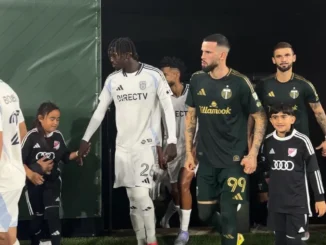
Providence Park helped carry Portland on opening day, but Vancouver did an excellent job neutralizing the environment. The Timbers are one of the few MLS teams that genuinely feed off the energy of their home crowd, and the Whitecaps methodically drained that atmosphere by dominating the ball and controlling the rhythm of the match.
Neville also entered week 3 dealing with a significant list of injuries. The most notable absence was designated player David Da Costa, Portland’s chief attacking creator. Center-back Alex Bonetig and veteran midfielder Diego Chara both missed the match with leg injuries. Cole Bassett, who had been one of Portland’s stronger performers early in the season, was also unavailable.
The midfield absences opened the door for 18-year-old Eric Izoita to make his first MLS appearance. The teenager joined the first team from Portland Timbers 2 on a short-term deal to cover the injury crisis. Not only did Izoita start the match, but he also became one of the few bright spots in an otherwise dim evening for the Timbers.
Felipe Mora began the match on the bench as Neville opted to start Alexander Aravena in attack. Gage Guerra also sat, with Kevin Kelsey getting the nod instead. Perhaps Neville wanted to shake things up after the blunt performance in Colorado during week 2.
Whatever the reasoning, neither Aravena nor Guerra lasted beyond the 63rd minute, and both struggled to make any meaningful impact before being replaced by the more established attacking options.
Brian White opens the floodgates
Vancouver opened the scoring in the 21st minute, and the goal came from a moment that initially appeared harmless. After breaking Portland’s counter-press, the Whitecaps circulated possession inside the Timbers’ half. Left-back Ian Smith briefly won the ball for Portland, but Vancouver immediately counter-pressed, and Jeevan Badwal regained possession almost instantly.
Sebastian Berhalter then received the ball just inside the penalty area and delivered a diagonal cross toward the far post. Brian White had drifted into space between Finn Surman and Brandon Bye, and the striker finished with the outside of his stretching right foot to give Vancouver a 1–0 lead.
The remainder of the first half followed the same script. Vancouver controlled possession while Portland chased shadows around the field. The Whitecaps finished the half with 66% possession, seven shots with four on target, and 265 accurate passes.
Portland managed just three shots in the opening 45 minutes, none of which tested goalkeeper Yohei Takaoka. The Timbers also completed only 117 accurate passes during the half. It was one-way traffic, and goalkeeper James Pantemis had to make two saves while his opposite number had virtually nothing to do.
Defensive errors continue after the break
The second half began exactly where the first left off, with Vancouver pushing forward in search of another goal. In the 49th minute, they doubled their lead, although the finish itself bordered on bizarre.
Berhalter delivered a free kick into the penalty area that initially appeared routine. Kamal Miller seemed positioned to deal with the ball, but the defender misjudged its flight. The ball dropped to the left foot of Tristan Blackmon, whose shot struck the post before ricocheting off his face and into the net.
While the finish may have looked comical, the buildup exposed another defensive breakdown from Portland. Blackmon was allowed to attack the ball without being pressured, and no Timbers defender tracked the run. For a set-piece situation, it was a schoolboy mistake that handed Vancouver a two-goal cushion.
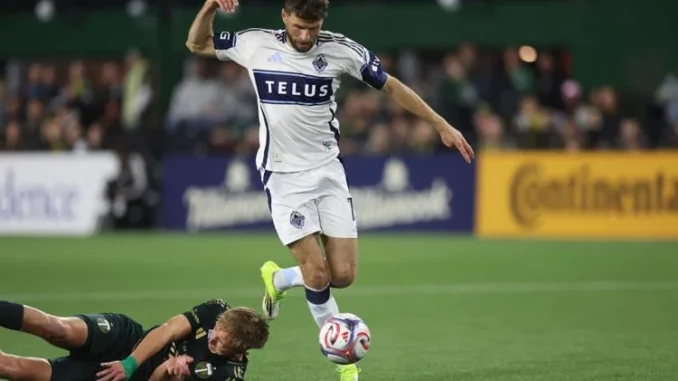
The second goal effectively drained the crowd, and Vancouver’s third all but sent supporters toward the exits. Thomas Mueller has helped bring a winning mentality to Vancouver, and that mentality was evident in the buildup to the third goal. Mueller’s relentless pressing forced Portland’s defenders into a turnover, allowing the Whitecaps to transition quickly into attack.
Aziel Jackson drove into the penalty area before laying the ball off to Berhalter, who opened his body and guided a low shot into the corner of the net. Sixty-three minutes had passed, the score was 3–0, and once again, Portland failed to track runners inside their own penalty area.
A brief spark from a teenage debutant
The night had largely belonged to Vancouver, but Portland did offer a brief moment of hope in the 72nd minute. A rare Timbers attack produced a cross from Kristoffer Velde that the Whitecaps failed to clear properly. The loose ball fell to Joao Ortiz, whose pass found Izoita just outside the penalty area.
The 18-year-old curled a composed left-footed shot past Takaoka and into the net. For a moment, Providence Park had something to cheer about. Izoita’s goal offered a glimpse of a potential future first-team player.
The Timbers briefly carried that momentum forward. Substitute Ariel Lassiter forced Takaoka into action minutes later with a well-struck free kick that required a sharp kick save from the Vancouver goalkeeper.
Vancouver’s press delivers the final blow
Unfortunately for Portland, the spark was short-lived. Vancouver quickly reasserted control, and their pressing continued to disrupt the Timbers’ buildup.
In the 87th minute, Portland turned the ball over once again. Referee Víctor Manuel Rivas ignored two clear fouls on Velde during the sequence, but the Timbers still failed to reorganize defensively as Vancouver transitioned forward.
Kenji Cabrera delivered the final pass, picking out White inside the penalty area. The striker finished for his second goal of the night, sealing a 4–1 victory and completing an evening that exposed several of Portland’s defensive flaws.
Early pressure on Neville
Three matches into the MLS season, the Timbers now sit on three points from a possible nine. That start inevitably increases the scrutiny on Neville. According to FotMob, Neville averaged 1.4 points per game in 2024 and 1.3 points per game in 2025.
Those numbers are not dramatically different from those of previous managers in Portland. Both Caleb Porter and Giovanni Savarese produced similar points-per-game figures during their full MLS seasons with the club. Neville is in the final year of a three-year contract. If results like this persist, then it makes complete sense for the club to part with the head coach at the end of the regular season – because right now the playoffs don’t look possible with these tactics.
There is an unusual wrinkle in this MLS campaign. Only 11 regular-season matches remain until the 2026 FIFA World Cup break. That mid-season break could reshape the playoff race, giving teams a chance to regroup and prepare for the final stretch of the season.
Next test: Houston Dynamo
Before any long-term thinking begins, Portland must focus on its immediate task. The Timbers travel to face the Houston Dynamo on matchday 4. Houston currently sits on three points from two games after their week 3 match against the New England Revolution was postponed due to severe weather and an unplayable pitch.
The Dynamo opened the campaign with a 2–1 win over the Chicago Fire before falling 2–0 at home to Los Angeles FC. Portland’s only road match to this point was a 2–0 defeat against the Colorado Rapids.
The question now is whether Neville can stabilize his team before the early-season slide deepens. In his post-match press conference following the loss to Vancouver, Neville pointed out that the Timbers were missing six players who could have started the match. Still, he also acknowledged the reality of the situation.
That situation was that all four Vancouver goals came from Portland’s mistakes. Neville’s honesty is important, but it also highlights the scale of the problem. If the Timbers want a result against Houston, those defensive lapses have to be corrected on the training ground this week.
If the defensive lapses the Timbers displayed in weeks 2 and 3 are resolved, then perhaps the attack can start firing once more. As it stands, Portland has three points, scored four goals, and conceded eight times across three games.