If you had told Portland Fire fans before the season that an expansion roster would enter the WNBA All-Star break within striking distance of a playoff spot, feature one of the league’s most interesting young guards, and routinely make life uncomfortable for established teams, most would have taken that deal immediately.
That’s essentially where Portland finds itself. The Fire entered the break at 11-16 after falling 101-97 to the Dallas Wings on Wednesday night. They’re fifth in the Western Conference and ninth overall in the WNBA standings, putting them immediately outside the eight-team playoff field.
For an expansion team, that’s not bad. Actually, it’s pretty encouraging. That doesn’t mean Portland’s first season has been flawless. Far from it. The Fire have some very obvious weaknesses, and one of them in particular has reached the point where you can practically circle it in red marker on every box score.
Still, there has been much more good than bad when looking at what this franchise is trying to build.
PRO: Carla Leite Looks Like A Franchise Building Block
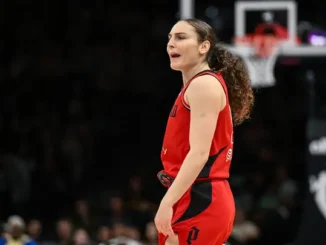
This has to start with Carla Leite.
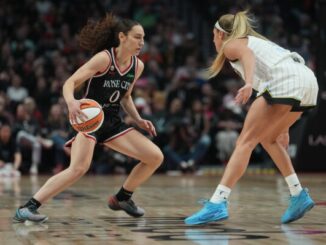
At just 22 years old, Leite has quickly become Portland’s offensive engine. She’s averaging roughly 15.5 points and 5.8 assists per game, numbers that don’t fully capture how much responsibility the Fire have already placed in her hands.
Expansion teams desperately need to uncover players who can grow into something bigger, and Portland may have found exactly that. Leite can attack the basket, create for teammates, push the tempo and manufacture offense when possessions start falling apart.
She doesn’t always make the right decision, and turnovers remain part of the package, but that’s hardly shocking for a young guard being asked to run an entirely new team. The fascinating question isn’t whether Leite can be Portland’s starting point guard. It’s how good she can eventually become.
That’s a wonderful problem for an expansion franchise to have.
PRO: Portland Has Found Real Offensive Balance
The Fire aren’t an elite offensive team yet, but they’re also not relying on one player to drag them through every game.
Portland averages 85.3 points and 20.5 assists per game. The Fire rank third in three-point attempts and fifth in made threes, showing that head coach Alex Sarama has already established the kind of offensive identity he wants.
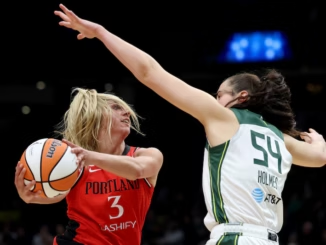
Bridget Carleton has been especially important. She’s averaging around 13.7 points per game and has developed into one of Portland’s most dependable perimeter threats. Through July 21, Carleton ranked sixth in the entire WNBA with 65 made three-pointers, earning her a spot in Friday’s WNBA Three-Point Contest.
Sarah Ashlee Barker has also been one of the season’s revelations, averaging around 11 points, 4.6 rebounds and 2.4 assists entering Wednesday. Megan DiLeo has supplied interior scoring, while Emily Engstler brings versatility, passing and energy.
There are nights when the offense gets stagnant, but there are also nights when Portland looks remarkably connected for a group assembled only months ago. That matters.
CON: The Rebounding Is A Serious Problem
Now for the giant, flashing warning sign: Portland cannot rebound.
The Fire are averaging only 29.3 rebounds per game, dead last in the WNBA. They also rank last in defensive rebounds and 14th in offensive rebounds. Opponents are averaging 34 rebounds against them.
Wednesday’s loss to Dallas provided the perfect example. The Wings outrebounded Portland 45-30 and held a 16-4 advantage in second-chance points. Portland nearly completed another wild comeback anyway, but asking your defense to repeatedly get stops only to surrender another possession isn’t sustainable.
Some of this comes down to personnel. Portland doesn’t have a dominant rebounder controlling the paint. But rebounding isn’t exclusively a center statistic. Guards and wings have to finish defensive possessions too.
For all the talk about offensive development during the second half, this might be Portland’s clearest area for improvement.
CON: The Defense Still Gives Away Too Much
The Fire allow 90.6 points per game, one of the worst marks in the league. Opponents are shooting 46.6 percent overall and a particularly damaging 54.4 percent on two-point attempts. Portland also allows 23.4 assists per game, the highest figure in the WNBA.
That’s not one problem. It’s several connected problems. When Portland gets beaten initially, the defense can scramble too aggressively. Once that first rotation occurs, opponents often find another pass, another opening or an opportunity around the rim.
The interesting part is that the Fire can absolutely defend in stretches. We’ve seen bursts where their pressure and activity completely change games, but consistency is the issue.
Portland doesn’t need to suddenly become the league’s best defense. Even reaching average territory would dramatically change the team’s playoff chances because the offense is already good enough to keep them competitive.
PRO: These Players Don’t Quit
This might be my favorite thing about the Fire: they’re annoying, and I mean that as the highest possible basketball compliment.
Portland keeps hanging around. Wednesday was another example. Dallas appeared ready to put the game away several times, including a nine-point lead with a little more than a minute remaining. Portland still cut the deficit to two and had an opportunity to tie the game before ultimately losing 101-97.
We’ve watched this team steal close games, rally from deficits and continue competing against opponents with more talent and far more continuity. Expansion teams are supposed to look disjointed. The Fire often look stubborn.
I’ll take stubborn.
CON: Turnovers Still Make Life Harder Than Necessary
There is a price that comes with Portland’s aggressive offensive approach. The Fire average 14.5 turnovers per game, putting them toward the bottom of the league.
Leite is a huge part of Portland’s creation, so some turnovers are inevitable. But the Fire don’t have enough margin for error to casually surrender possessions, especially when combined with the rebounding issue.
Lose the turnover battle and the rebounding battle, and suddenly an opponent gets dramatically more opportunities to score. That’s a rough way to live, no matter how entertaining the comeback attempts become.
PRO: Portland Already Feels Like A WNBA City Again
The biggest victory of the season might have nothing to do with the standings.
Portland’s opening-night crowd of 19,335 set a record for attendance at a WNBA franchise debut. A few weeks later, 19,347 packed Moda Center for Portland’s win over Indiana.
The “Fire Pit” doesn’t feel like a temporary experiment. It feels established, and that’s enormously important for a new organization. The franchise doesn’t have to spend several seasons convincing Portland to care. Portland already cares.
Now the basketball side simply has to catch up with the enthusiasm surrounding it.
The Biggest Question: Sarah Ashlee Barker
Unfortunately, Portland entered the break with a new concern.
Barker injured her left knee after a hard fall early in Wednesday’s game and needed help getting off the floor. She didn’t return. As of Thursday, there hasn’t been a definitive public diagnosis.
Losing Barker for any significant stretch would hurt. She has been one of Portland’s most consistent two-way players and, at 24, represents another piece who could potentially grow alongside Leite as this roster develops.
For now, there’s nothing useful to do except hope the injury isn’t as serious as it appeared.
So, How Should We Grade The First Half?
I’d give Portland a B.
An 11-16 record isn’t something to celebrate by itself, but the context changes everything. This is an expansion team. There was no established chemistry, no superstar waiting to carry the franchise and no years-long system already in place. Portland essentially started from scratch.
Yet the Fire reach the All-Star break sitting ninth overall, within sight of the postseason. More importantly, they’ve discovered legitimate pieces.
Leite looks like someone you build around. Carleton has embraced a larger role. Barker has been excellent. Sarama has created a recognizable style. The crowd is already invested.
Now comes the hard part. Portland must rebound better, defend the paint, decrease the turnovers and find someone to step forward if Barker misses significant time.
Nobody should mistake the Fire for a championship contender yet, but halfway through Year One, that’s not really the point. The point is whether Portland has given fans a reason to believe this thing is going somewhere.
So far? Absolutely.