
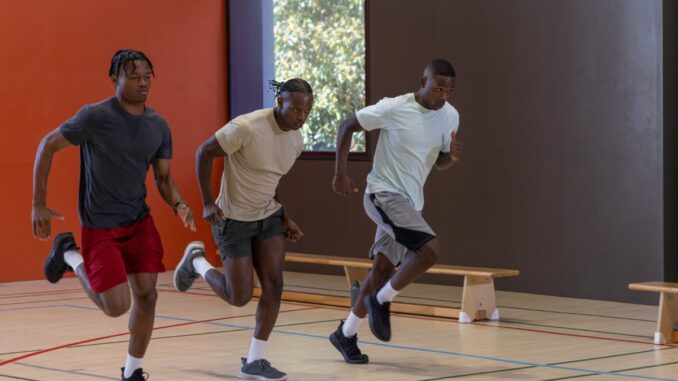
Acceleration can change a play before it fully develops. A defensive back closing on a receiver, a Timbers midfielder attacking open space, or a basketball player driving past a defender all rely on the ability to produce speed within a few steps.
Top-end speed matters, but athletes rarely get a long runway during competition. Smart acceleration training focuses on force, body position, and efficient movement from the instant an athlete takes off. Below, we offer practice training tips for athletes who want to improve their acceleration.
1. Build a Strong Starting Position
A fast start begins before the first step. To maximize acceleration, athletes should begin their spring by leaning forward from the ankles, bracing their torso, and positioning their hips to drive toward the intended direction.
Standing upright too soon limits forward force. Bending sharply at the waist creates another problem by weakening posture. Athletes need a strong, connected line that allows the legs to push the body forward.
2. Push the Ground Behind You
Quick feet can look impressive, but rapid steps do not guarantee meaningful acceleration. Athletes must apply force backward into the ground to move forward with power.
Each early stride should feel like a push rather than a reach. When the foot lands too far ahead of the hips, it creates a braking effect. Landing closer beneath the body helps preserve momentum.
3. Add Resisted Sprinting
Another training tip for athletes to improve their acceleration is to incorporate resisted sprinting into their workout regimen. Sled drags and similar drills give athletes immediate feedback.
Resisted sprinting improves acceleration mechanics by rewarding a forward lean, forceful hip extension, and deliberate ground contact. When athletes drop the resistance, their sprinting mechanics become more natural and powerful. Coaches should select a load that challenges the athlete without turning the drill into a slow march.
4. Strengthen the Posterior Chain
While mechanics are critical to acceleration, strength training can also improve sprint quality. The glutes, hamstrings, and calves help create the force necessary for an explosive start. Squats, deadlifts, split squats, hip thrusts, and loaded carries can develop the strength behind that movement.
Strength work should support sprinting rather than replace it. Athletes still need short, high-quality sprints to teach the body how to apply new strength at game speed.
5. Protect the Quality of Every Rep
Acceleration drills lose value when fatigue ruins technique. Athletes should keep sprint distances short, rest between repetitions, and stop the session when posture or power declines.
A handful of crisp efforts delivers more value than a long series of tired sprints. Consistent training should leave athletes moving with purpose, not surviving sloppy repetitions.
Faster Starts Come from Better Movement
Athletes do not improve their first step by chasing speed alone. They improve it by creating force, directing that force efficiently, and repeating sound mechanics. Train those details consistently, and quicker starts can follow across the field, court, or track.