As we gear up for Super Bowl LX on February 8 at Levi’s Stadium in Santa Clara, the New England Patriots and Seattle Seahawks are set to deliver a sequel to their unforgettable 2015 clash. That game, Super Bowl XLIX, ended with Malcolm Butler’s goal-line interception sealing a 28-24 win for the Pats, still one of the most dramatic finishes in NFL history. This time around, it’s a fresh chapter: no players from that 2015 roster remain on either team, making it the first Super Bowl rematch without any holdovers from the original matchup. With both squads boasting top-tier offenses and defenses, expect fireworks. Here’s a roundup of the most intriguing stats, facts, and trivia to impress your watch party crew.
Historical Hooks and Rematch Vibes
This marks the 10th Super Bowl rematch in league history, joining classics like Steelers-Cowboys (three times) and recent ones like Chiefs-Eagles. The original winner has claimed the sequel in six of the nine previous do-overs, giving the Pats a historical edge. It’s also the first Super Bowl since the 1970 merger pitting two teams that both ranked in the top four for scoring offense and defense during the regular season. New England averaged 28.8 points scored (second-best) and 18.8 allowed (fourth-best), while Seattle led the league in points allowed at 17.1 per game.
Levi’s Stadium is hosting its second Super Bowl (after Super Bowl 50 in 2016, when the Broncos topped the Panthers), but the Bay Area has hosted three Super Bowls overall, including Super Bowl XIX at nearby Stanford Stadium. California as a whole claims 14 Super Bowls, more than any other state. Fun quirk: Seattle has reached the big game three times since 2000 as the NFC’s No. 1 seed, each within a year of a new pope being named. Talk about divine intervention.
Quarterback Spotlights: Youth vs. Journeyman
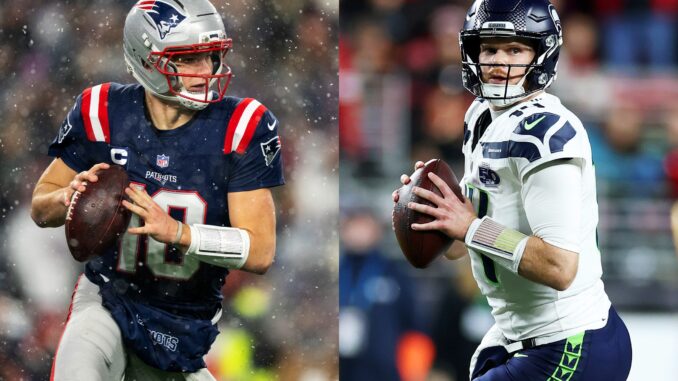
At the helm for New England is Drake Maye, who at 23 years and 162 days old becomes the second-youngest QB to start a Super Bowl, trailing only Dan Marino. A win would make him the youngest ever to hoist the Lombardi Trophy, edging out Ben Roethlisberger. Maye shattered Patriots records with a 72% completion rate in the regular season and led the NFL in EPA per pass play, including when pressured. He’s also a scrambling threat, ranking second in rushing success rate among players with 100+ carries.
Opposite him is Seattle’s Sam Darnold, a former No. 3 overall pick like Maye, the first such duo to start since Matt Ryan in Super Bowl LI. Darnold’s on his fifth team, the most for a starting QB in his Super Bowl debut since 1998. He’s 0-4 lifetime against the Pats, with a dismal 41.2 passer rating in those games. A victory would make him the third QB in six years to win a ring in his debut season with a new squad, following Tom Brady and Matthew Stafford. Both QBs have ties to Josh McCown: Darnold as a rookie backup, Maye as a high school pupil. And neither’s college (USC for Darnold, UNC for Maye) has produced a Super Bowl-starting QB before.
Coaching and Player Milestones
Patriots head coach Mike Vrabel could become the first person to win a Super Bowl as both a player and coach for the same franchise—he snagged three rings as a Pats linebacker. At 38, Seattle’s Mike Macdonald is the third-youngest coach to reach the Super Bowl. It’s a Mike-vs.-Mike showdown, the third in Super Bowl history. Seahawks OC Klint Kubiak could win at the same venue where his dad, Gary, triumphed as Broncos HC in Super Bowl 50.
On the field, Seahawks WR Jaxon Smith-Njigba eyes becoming the fifth reigning receiving yards leader to win a Super Bowl. Pats WR Stefon Diggs finally hits the big stage after 80 playoff catches (12th all-time), with all players ahead of him (except Davante Adams) having Super Bowl experience. Seattle’s Kenneth Walker III accounted for nearly half of the team’s rushing yards, while Pats rookie TreVeyon Henderson set a franchise mark with 5.1 yards per carry. Defensive standout: Seattle’s “Blue Wall” front racked up 47 sacks.
Team Turnarounds and Defensive Dominance
The Pats’ journey is epic: from 4-13 last year to 17-3, the biggest single-season improvement in NFL history (13-win swing including playoffs). They’re the first team to reach the Super Bowl after a 13-loss campaign. In the playoffs, their defense allowed just 8.7 points per game and a measly 26 total points, the fewest through three games since 2000. Seattle’s D, meanwhile, hasn’t allowed a fourth-quarter point in the postseason.
| Category | Patriots | Seahawks |
|---|---|---|
| Regular Season Points Scored/Game | 28.8 (2nd) | 28.4 (3rd) |
| Points Allowed/Game | 17.3 (2nd) | 17.1 (1st) |
| Point Differential | +170 (3rd) | +191 (1st) |
| Playoff Win % | 85% | 84.2% |
| Super Bowl Appearances | 12th (NFL record) | 4th |
A Pats win gives them a record seventh title; a Seahawks victory makes them the 17th franchise with multiple rings. Jersey trivia: Teams in white are 37-22 all-time in Super Bowls, and the Pats are opting for their road whites, fitting for a team that went 9-0 away this year. Seattle’s all-blue look? They’re 0-2 in Super Bowls wearing it.
Wild Cards and Super Bowl Experience
Both teams missed the playoffs last year, making this the sixth such Super Bowl matchup. Seattle has only three players with ring experience (including Cooper Kupp from Super Bowl LVI), while New England has five, led by Milton Williams, who is chasing back-to-back wins with different teams. It’s the first Super Bowl with both QBs and coaches in their first or second year with their teams. And for a Pacific Northwest twist: As Seattle celebrates its 50th NFL season, this could be the ultimate birthday gift.
Whether it’s Maye’s mobility clashing with Seattle’s pressure-heavy D (five players with 40+ pressures) or Darnold’s play-action prowess testing New England’s blitz (third-best EPA when sending extra rushers), this game’s got layers. Buckle up: Super Bowl LX might redefine “rematch.”