
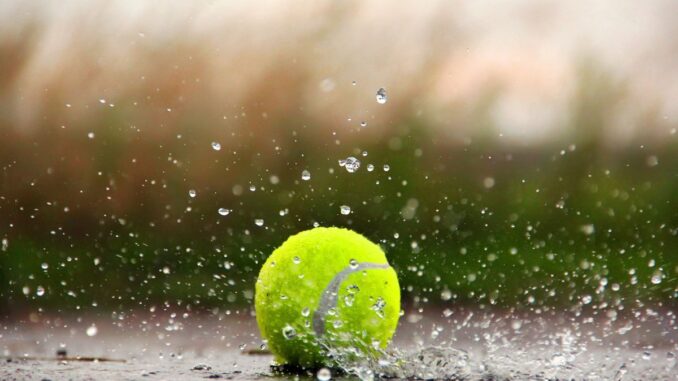
Oregon tennis players know how quickly the weather can turn. A match may start under gray skies before a passing shower leaves the court shining with moisture. When the rain looks light, players may feel tempted to continue rather than abandon a good match.
That choice can create more than an inconvenient delay. Tennis depends on quick reactions and controlled movement, while rain changes how the court, ball, and equipment respond. Understanding those changes can help players decide when conditions no longer support safe, enjoyable play.
1. Slippery Footing Increases the Chance of a Fall
Tennis requires sudden stops and fast changes in direction. Those movements depend on shoes gripping the court consistently. Water can reduce that grip, especially in low areas where moisture collects.
A court does not need large puddles to become hazardous. A thin film of water can create slick patches that are difficult to notice until a player steps onto one. That makes wide returns and emergency recovery steps particularly risky.
A fall can result in more than a scrape or bruise. An awkward landing may strain an ankle or knee, while trying to catch the body with an outstretched hand can put extra force through the wrist or shoulder. Because tennis involves quick movement, players have little time to react once their footing gives way.
2. Wet Conditions Can Disrupt Technique
Poor footing does not only increase injury risk. It can also change how a player sets up for each shot. Players who do not trust the court may shorten their steps or arrive late to the ball.
That hesitation can affect balance and timing. Instead of moving smoothly into position, a player may reach with the upper body or make contact from an awkward stance. Those adjustments can reduce control and make otherwise routine shots feel more difficult.
While playing tennis on a wet court, players may also become less willing to commit to normal movement patterns. That can affect shot preparation and recovery between strokes. Even when no one slips, the quality of play may drop because players cannot move naturally.
3. Wet Tennis Balls Behave Differently
Rain changes the ball as much as the court. Tennis ball felt absorbs moisture, which adds weight and reduces the lively response players expect under dry conditions. A soaked ball may travel more slowly and bounce lower.
Players often compensate by swinging harder to create their usual depth. Over time, that extra effort can increase fatigue and place more strain on the arm. Timing also becomes harder when the ball no longer travels at its normal speed.
Wet balls can also collect dirt from the court. That added grime may make them feel heavier and less predictable during rallies. Once the ball stops behaving consistently, competitive points can lose their normal rhythm.
4. Painted Lines Can Create a Separate Hazard
Court lines deserve special attention after rain. Painted areas can become slick because their texture may differ from the surrounding playing surface. A player who feels stable on the main court may notice less grip when stepping onto a line.
That matters because players cross painted sections throughout a match. Wide groundstrokes pull players toward the sidelines, while serves and returns bring the baseline into play repeatedly.
The risk can be easy to overlook because the line may not look wetter than the rest of the court. Players should pay attention to how those areas feel underfoot before resuming full-speed play.
5. Serving Becomes Harder to Control
Serving places unique demands on balance and coordination. The motion begins with a stable stance and ends with the player landing and preparing for the return. Damp conditions can interfere with that sequence.
A player who worries about the landing may reduce leg drive or shorten the motion. That can make the serve feel less fluid and affect pace or placement.
Rain may also arrive with wind, making the ball toss less predictable. When players must adjust the toss and think about where they will land, the service motion becomes much harder to repeat comfortably.
6. Rain Can Affect Tennis Equipment
Moisture can quickly interfere with equipment. A damp racquet grip becomes harder to hold securely, which may cause players to squeeze the handle more tightly than usual. That extra tension can tire the hand and forearm sooner.
Shoes and socks can also absorb water during a long session. Wet footwear often feels heavier and less comfortable, which can distract players even after the court begins to dry.
Players can use a rain delay to protect their gear and check whether anything needs drying or replacing before they return to the court. Using the interruption wisely can make the return to the court more comfortable and reduce the temptation to restart before equipment is ready.
7. A Court May Need More Time After the Rain Stops
The end of the rain does not mean the court is ready. Drying time depends on temperature, shade, drainage, and how much water fell. One part of the playing area may dry quickly while another remains damp.
Oregon’s cooler or overcast conditions can slow down that process. Baselines and shaded corners may hold moisture longer than open areas near the center of the court.
Players should inspect the full court before restarting. Walking through different areas can reveal lingering moisture without putting the body through a full-speed test. If simple movement feels uncertain, the court likely needs more time.
8. “Taking It Easy” Has Limits
Players sometimes decide to continue if everyone agrees to play cautiously. That can work during gentle warm-up shots, but rallies rarely remain controlled once competition takes over. A short ball or sharp angle can trigger an instinctive sprint before a player has time to think about the conditions.
Tennis depends on reactions. Even recreational players move suddenly when they believe they can reach a difficult shot.
That makes playing tennis on a wet court difficult to manage through caution alone. Players can reduce the pace of a match, but they cannot predict every movement a point may require. Once the court starts forcing players to change how they naturally react, stopping becomes the more practical choice.
9. Wet Play Can Also Affect the Court
Rain can wash leaves, dirt, and other debris onto a tennis court, where moisture may trap it against the surface. Continued foot traffic can grind that material into the coating or spread it into areas that have already started to dry. Clearing debris before moving standing water helps keep the court cleaner and makes drying more efficient.
Players and court managers should also avoid using rough or unsuitable tools to remove water. A better approach involves moving water toward established drainage areas with equipment designed for the court surface.
Public courts and clubs may also have their own wet-weather procedures. Players should respect posted closures and allow staff to handle drying when required. Those rules help protect the court from unnecessary wear while giving maintenance crews time to prepare the surface properly.
When Should Players Stop?
Players do not need to wait for standing water before calling a delay. Slipping shoes, heavy tennis balls, damp equipment, or trouble controlling normal movement can all signal that conditions have changed enough to affect the match.
Rain delays can frustrate anyone who carved out time for a game, especially in a climate where showers can arrive without much warning. Still, postponing a set creates far less trouble than recovering from an avoidable fall or damaging the court.
The court will still be there once conditions improve. Waiting for dependable footing and normal equipment performance helps preserve the quality of the match and makes returning to play more enjoyable.