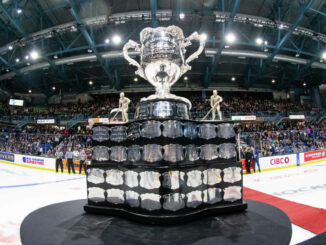
The 2026 Memorial Cup played out pretty much as it was meant to, with four teams, two of which were league leaders. One was a surprise winner in the QMJHL but was still regarded as a tough team, along with the host. Everett reached the finals after a 4-0 win over the Kelowna Rockets, who exited the tournament winless at 0-3. Everett then faced the Chicoutimi Sagueneens in the semifinal and crushed them 6-1, giving Everett a 3-1 tournament record and Chicoutimi a 1-3 mark.
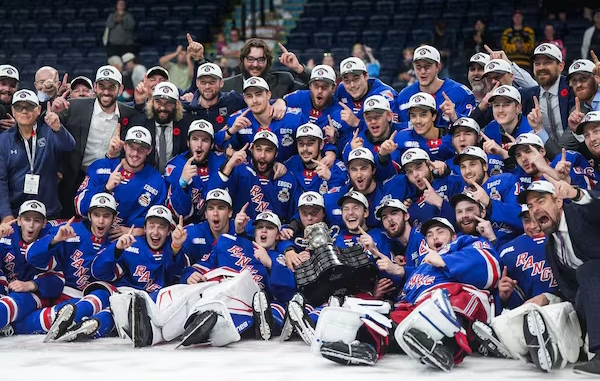
The final was almost a duplicate of the first meeting between Kitchener and Everett, a 6-2 Kitchener win. The difference was that Kitchener scored early and often, never allowing the Silvertips to get close on the scoreboard. Once again, the goaltending of Kitchener was outstanding. With 32 shots for each team, the big difference was in the special teams. The Rangers had two power-play goals and a shorthanded empty-net tally in the win. Kitchener never trailed in the contest, which was again played before a sellout crowd. None of the games were anything less than a sellout, showing that fans, while supporting their favorite teams, also support great hockey and the chance to host the Cup, which Kelowna had previously done in 2004.
Lots of controversy surrounds the host team, the Kelowna Rockets. Originally set to host the Cup in 2020, that tournament was canceled due to COVID. The tournament also missed the following year before returning to its rotational basis among the three leagues that comprise the CHL. Many armchair coaches have complained about the format, arguing that a host team buys its way in. Usually, though, that team is also bulking up on players to be competitive.
Competitive is the operative word. This year, the Kelowna Rockets were shut out twice, 5-0 by the Kitchener Rangers and 4-0 by the Everett Silvertips, but they did manage two goals in their loss to Chicoutimi, arguably their most competitive matchup, a 3-2 overtime defeat. Overall, the crowds were strong, with announced nightly sellouts, which most likely translates into a financially successful Memorial Cup. Rarely do the numbers get released in terms of finances, so nobody really knows what the Memorial Cup bid-versus-receipts will be, but it will most likely be in the green.
The same can’t be said for every host city. Regina, for example, is said to have bid over $3 million on the Cup, and attendance wasn’t full nightly while the team also didn’t strike gold. Rumor has it the loss approached $1 million after all was said and done.
That brings us back to the host teams. Rarely are they close to the finals. They have to spend a great deal to accumulate players, usually “rental players” who are there for part of a season, and then they have to rebuild over several years to become competitive again. Word is that CHL heads are meeting after the Cup to discuss what, if anything, should be done. People have suggested that if a team hosts, it should also be one of the finalists from the leagues hosting the Cup. Logistically, that could be a nightmare. The cash cow that is the tournament bid would be tough for any team to raise, let alone sell enough tickets to guarantee crowds that make financial sense. Then, in the WHL, for example, Calgary and Edmonton could never host a Cup because they have NHL teams and other events using those buildings. Cutting off almost two weeks of use by the bigger franchises becomes a non-starter.
There are also the costs. Some smaller franchises could ill afford to host. Most of the Eastern Division would likely be excluded, including Prince Albert and Swift Current due to size, and Brandon simply because the venue is used for so many other events that utilize the whole area, not just the arena. Only Saskatoon, with the larger arena, is most likely to host, and the Regina experiment may now prove to be a one-off deal.
Alberta has two other potential rinks: Lethbridge and Medicine Hat. Both have smaller surrounding populations, though Medicine Hat has hosted before. The bid may be too high. Red Deer is not really an option. In BC, Prince George may have a big enough arena, but with a population of only 70,000 to 80,000 and logistical challenges in getting there, it may not work financially. The same goes for Victoria, which is on an island and has its own logistical problems. The Vancouver Giants, who play at the Langley Events Centre, might consider the Pacific Coliseum, which they vacated long ago for financial reasons.
Then there are the US-based teams. The Memorial Cup is centered around Canadian teams. With only eight US-based teams across both the WHL and OHL combined, three stand out as possibilities. Spokane, which hosted once during Portland’s 1998 Cup win, has a 10,000-seat arena. Seattle could potentially work out a deal with the Seattle Kraken of the NHL since accesso ShoWare Center is too small at around 5,000 seats. Everett’s Angel of the Winds Arena holds more than 8,000. The Portland franchise has two possibilities: the Moda Center and the Veterans Memorial Coliseum. Both hold more than 10,000, and the Coliseum was recently renovated while discussions continue about the arena across the way. The CHL’s reluctance to have a US-based host limits the places it can go. Other arenas in Tri-Cities and Wenatchee are around the 5,000-seat mark, and smaller populations limit their ability to host events.
Usually, the host team is announced before the Memorial Cup begins. This year, it was announced in late November that the Guelph Storm, another relatively small-market team with a 4,200-seat arena, would host. Being closer to other markets, they will likely have an easier time selling tickets and sponsorships. What happens from this point forward is unknown, but the fact that the leagues are talking means a format change may happen sooner rather than later.
Several teams over the years have either been forced to relinquish hosting duties or voluntarily stepped aside due to regular-season records, which we have outlined in the past.
No matter how you break it down, there will never be a firm consensus on how the tournament should operate if regulations on a host team’s standings or duties are factored in. Regardless, people can still see tremendous hockey in one place each year and watch the stars of the future in a less expensive environment.