It didn’t take long into the new calendar year to be reminded that January isn’t all about football—it also opens the NBA’s official trade season.
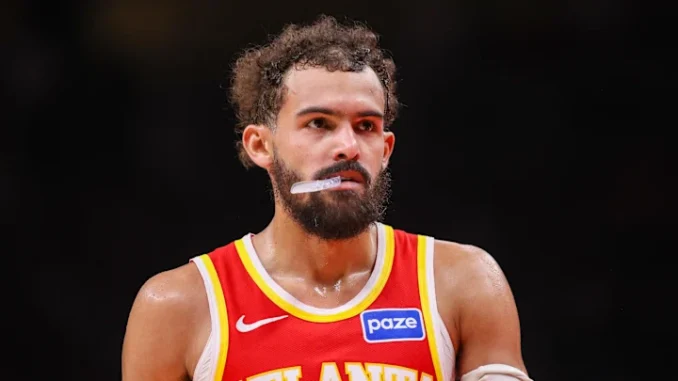
On Monday, ESPN’s Shams Charania reported that Trae Young and his camp have been working with the Atlanta Hawks to find a trade for the 27-year-old, four-time All-Star.
It marks the beginning of the end for a relationship that dates back to 2018, when the Hawks traded Luka Dončić’s draft rights for Young. And naturally, it sparked a wave of hypothetical trade scenarios across the sports media world—one of which involves the Portland Trail Blazers.
The Proposed Trade
Via ESPN
Trail Blazers get: Trae Young
Hawks get: Jerami Grant, Robert Williams III
On the surface, this looks…exceptional. In terms of pure talent exchange, the Blazers come out big winners. They’d be adding a proven star guard in exchange for two players, who could realistically be traded for less-proven, young assets, or future draft capital, in separate deals anyway.
What’s missing for Portland here is the part that usually shows up in Trae Young proposals elsewhere: a first-round pick headed to the receiving team as compensation for taking on the final two years and $94.97 million of his contract.
In most rumored or speculated deals, the receiving team gets draft capital in addition to Young. The Blazers wouldn’t be getting that safety net in this scenario.
Why It Wouldn’t Work
Yes, Portland would win the talent swap. But Trae Young’s place on this roster makes little sense—especially if neither Jrue Holiday nor Scoot Henderson is included as an outgoing asset.
Holiday looked like a stabilizing presence in the starting lineup before getting hurt, but his contract and age profile don’t make sense for Atlanta. Scoot Henderson, meanwhile, deserves a real runway to show he can thrive in Portland’s fast-paced system. Putting him behind both Trae and Jrue shrinks that opportunity dramatically—before acknowledging the Damian Lillard storyline looming over next season.
There are reasons Joe Cronin might explore a home-run swing. The backcourt has been decimated by injuries. Deni Avdija’s usage rate has skyrocketed from the 66th-highest mark last year to No. 17 this season, and he’s played more total minutes than anyone in the NBA. He’s handling the ball out of necessity more than design, and while his individual production is impressive, the sustainability of team success will be in question without a more balanced rotation.
Overall, adding Young would instantly electrify the offense. Avdija could settle back into a more natural role, and if we’re being honest, imagining Trae tossing lobs to a rolling Donovan Clingan is enough to get anyone thinking about the young center’s ceiling.
But this isn’t NBA 2K. Expecting Rip City to become Lob City overnight would be wishful thinking. And even if the offense improved, the defensive trade-offs and role-overlap problems might outweigh the benefits, particularly for a team prioritizing development and identity-building.
How Portland Can Still Get Involved
There’s another, cleaner way for the Blazers to benefit from Trae Young Trade SZN.
If Portland decides not to chase Young, they can still play a major role in a Young deal. And they can do it as a benefactor rather than a buyer.
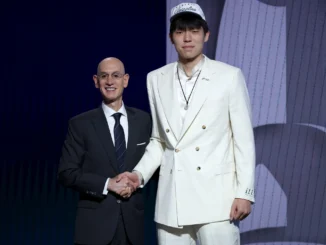
Portland owns draft picks other teams want, including Orlando’s 2028 unprotected first-rounder, acquired as part of the Yang Hansen draft-rights trade. While it may not carry the same speculative juice as Milwaukee’s future picks, which Portland also owns, it’s a potential sweetener in multi-team negotiations.
And we already have a likely landing spot.
At this point, the Washington Wizards are the most-rumored Trae Young destination. If that scenario gains real traction, Portland is positioned to step in as a facilitator, taking on salary and picking up a role player who fills a need.
Someone like Corey Kispert, a floor-spacing three-and-D wing on a reasonable contract, fits the mold of a player Portland could absorb in exchange for helping make the money work. At 26, he’s young enough to fit the timeline, low-maintenance enough not to disrupt development, and skilled enough to raise the team’s nightly floor. And everything about that approach keeps the Blazers aligned with their identity.
Above all else, Portland doesn’t need to shortcut the rebuild or complicate its guard hierarchy with splash over substance. The team doesn’t need to go so win-now, chasing a star who doesn’t solve enough problems, that it forgets the long-term vision.
More than anything, the Blazers need to keep stacking value, protecting their path ahead, and they need to choose the right moments to strike—not risk striking too soon.
A Trae Young trade could help Portland. Just not in a way that’s worth going off course.