
The Portland Fire walked out of Monday’s WNBA Draft looking like a team that actually knows what it wants to be.
That may not sound flashy, but for an expansion franchise, it is a huge compliment.
Portland used the No. 7 pick on Spanish point guard Iyana Martín, grabbed German forward Frieda Bühner at No. 17, and then added big Serah Williams via a post-draft trade. It was not the kind of draft that makes people lose their minds on social media for six straight hours. It was better than that. It was practical. It was thoughtful. And, most importantly, it fits the roster Portland has been building over the past couple of weeks.
Start with Martín, because that pick tells you a lot about what the Fire value. Portland already has interesting guards and secondary creators on the roster, including Carla Leite, Nika Mühl, Sug Sutton, Maya Caldwell, Sarah Ashlee Barker, Haley Jones, and Karlie Samuelson. What the Fire still needed was a true organizer, someone who could calm possessions down, get the ball where it needed to go, and help a brand-new team avoid looking like five strangers trying to assemble Ikea furniture without the instructions.
Martín looks like that kind of player. In EuroCup Women play this season for Perfumerías Avenida, she averaged 12.5 points and 5.0 assists per game, and her assist average ranked among the competition leaders. She also arrives with a serious international résumé, including being named MVP of the 2023 FIBA U19 Women’s World Cup, which makes this feel like much more than a stash-and-wait pick. For Portland, the fit is obvious. She gives the Fire a real point guard profile, someone who can create easier looks for wings and forwards already on the roster, instead of forcing everybody to manufacture offense on their own.
Then there is Bühner, who might turn out to be one of the sneakier good picks in the draft. In EuroCup Women this season with Movistar Estudiantes, she averaged 19.0 points, 7.2 rebounds, and 1.5 assists per game. She was not just productive, either. She was her team’s leading scorer and one of its most efficient players. In the quarterfinal stage, she had a 26-point, 7-rebound, 3-assist performance. That matters for Portland because this roster already has plenty of versatile forwards, but it still needs people who can go get points without the offense becoming a full-group emergency meeting.
The Fire’s frontcourt was already taking shape with Bridget Carleton, Emily Engstler, Chloe Bibby, Nyadiew Puoch, Luisa Geiselsöder, and Megan Gustafson. Adding Bühner gives Portland another scoring forward with size, which suggests this team wants length, flexibility, and multiple players who can slide between roles rather than live in old-school positional boxes. That is a smart way to build in today’s WNBA, especially for an expansion team that needs options more than it needs labels.
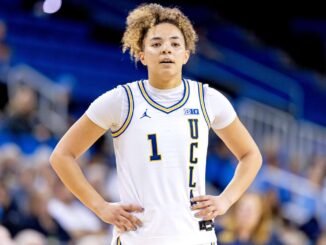
The most interesting move of the night, though, may have been the trade for Williams. Portland turned its No. 37 slot into the UConn big, and that feels like a very intentional move. Williams gives the Fire something every new team needs: interior presence. She finished her college career with 1,748 points, 951 rebounds, and 262 blocks, and this past season she averaged 13.6 points and 7.4 rebounds while shooting 52.5% from the field. That is proven production.
Her fit might be the easiest to understand of the three. Expansion teams are going to have defensive breakdowns. That is just part of the deal. So adding a 6-foot-4 post player with a real shot-blocking résumé and efficient interior offense makes a lot of sense. Gustafson gives Portland experience and scoring in the frontcourt, while Williams gives the Fire another younger interior option who can rebound, protect the rim, and clean up some of the mistakes that naturally come with a first-year roster.
And when you zoom out, that is really what made Portland’s draft so solid. The Fire did not draft in a vacuum. They drafted to the shape of the roster they already have. Martín brings ball control and setup ability. Bühner brings frontcourt scoring and rebounding. Williams brings size, defense, and efficiency around the basket. Those are three different needs, and Portland addressed all three in one night.
Now, is this the class that delivers Portland’s future face of the franchise? Maybe not. That is the one hesitation. This draft feels more like a “build a real team” draft than a “draft the superstar and sell the jerseys tomorrow morning” draft. But honestly, for Year 1, that may be exactly the right call. Expansion teams do not need to win the internet. They need to make sense. Portland’s draft made sense.
So what is the grade?
I’d give the Fire an A-.
Not a full A, because there is still a fair question about top-end offensive creation and whether this roster has enough players who can consistently go get their own shot late in games. But this was still a really strong night. Portland added a true playmaker, a productive scoring forward, and an interior defender with real college production. No panic. No weird reaches. No “what exactly are we doing here?” moments. Just a front office acting like it had a plan, then following it.
For a franchise starting from scratch, that is a pretty great place to begin.