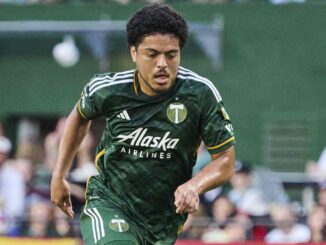

The 2025 season was not remembered fondly for attacking soccer if you support the Portland Timbers. Over 34 MLS regular-season matches, Portland finished with 41 goals scored while conceding 48 goals, numbers that tell the story of a team that too often struggled to impose itself on games.
More telling was how rarely the Timbers truly cut loose in attack. They scored three or more goals just five times all season. For a club that markets itself on excitement, atmosphere, and attacking talent, that simply wasn’t good enough.
The final of those five games came on April 28 in a 4–2 win over the LA Galaxy. After 10 matchdays, Portland had scored 20 goals, averaging 2.0 per game, and sat second in the Western Conference. At that point, it looked like the attack might carry them through the year.
Instead, it vanished.
From matchday No. 11 onward, the Timbers scored just 21 goals over the remaining 24 games–less than a goal a game. In other words, two-thirds of the season produced barely half of their total goals. Portland stayed in the playoff picture, but the downward trajectory was clear, and by October, the attack felt nonexistent.
A Very Different Feel Under the Lights
Supporters could be forgiven for expecting more of the same to start the new season. Instead, Sunday morning arrived with a very different mood after a 3–2 win over the Columbus Crew, sealed by an 88th-minute goal in what was arguably the most entertaining game of the opening weekend.
On a damp but picturesque night at Providence Park, Portland lined up in a 4-2-3-1 formation. Head coach Phil Neville spent much of 2025 favoring safety-first football, often prioritizing defensive structure over attacking freedom. Matchday No. 1 of 2026 suggested a shift in priorities.
Offseason additions Sam Bassett, Julian Bye, and Alex Bonetig were all thrown straight into the starting XI. Columbus, meanwhile, arrived in a 3-4-2-1 formation under new head coach Henrik Rydstrom, making his MLS debut on the touchline.
The atmosphere was electric in a uniquely Portland way, a reminder of why this fanbase remains the envy of much of the league, particularly for those ‘96 originals still struggling to feel relevant three decades later. The surface glistened under the lights, and the occasion felt appropriately big.
Early Chaos and a Familiar Defensive Warning
It took just five minutes for the visitors to strike. A blind back pass from Kristoffer Velde left Bonetig exposed, and Wessam Abou Ali pounced. The striker split center-backs Bonetig and Finn Surman before finishing past James Pantemis, punishing Portland for a self-inflicted mistake.
Moments later, the Timbers were fortunate not to be two goals down. Diego Rossi cut inside and forced Pantemis into a full-stretch save to his right, a moment that felt pivotal. Had that effort gone in, the game could have been effectively decided inside 10 minutes. Instead, it jolted Portland awake.
Columbus controlled the early phases with composure and intensity, but the Timbers gradually shook off the shock. Velde, clearly eager to make amends, tested Patrick Schulte with a driven effort in the ninth minute. That moment marked a subtle shift in momentum, and Portland began to sustain pressure. By the 14th minute, they were level.
Width, Second Balls, and a Leveler Earned
The equalizer was messy, but it was also earned. Left-back Jimer Fory found Velde in space on the left flank, and the Norwegian stretched Columbus’ back line with intelligent positioning. Given too much room, he shifted onto his right foot and whipped a cross into the box.
Columbus initially cleared, but only partially. The second ball ricocheted off Diego Chara to Javi Guerra. Guerra’s sliced volley turned into a fortunate assist. Felipe Mora reacted quickest, wrapping his foot around the ball and volleying home.
Columbus’ defensive line was slow to react, leaving Mora onside, and it would not be the last time the Crew struggled to deal with loose balls in their own penalty area.
Velde as the Catalyst
In my Timbers season preview, I questioned whether Neville’s side could truly move on from the passive tendencies that defined long stretches of 2025. On Saturday night, at least, the answer was an emphatic ‘yes’.
Portland’s football was aggressive, front-footed, and proactive, and no player embodied that spirit more than Velde. The designated player, who only featured a handful of times after arriving from Olympiacos last August, looked like a difference-maker.
Tracking back to win possession in midfield, Velde sparked the move that led to Portland’s second goal. Bassett collected the turnover and drove directly into Columbus territory. The Crew’s back line narrowed, leaving Antony isolated with space on the left.
Bassett found him with a perfectly weighted pass. Antony took one touch to set himself and rifled a right-footed finish into the net. It was quick, explosive counterattacking football, executed exactly as Neville would have drawn it up–assuming attacking football is what Neville wants this campaign.
Twenty minutes in, Portland led 2–1, and their wide players had completely dictated the match. The high press was central to everything, winning the ball and transitioning vertically before Columbus could reset.
The Inevitable Pushback
As seen elsewhere around MLS on opening weekend, high presses look devastating right up until teams find a way through them. Columbus did exactly that as halftime approached, playing through Portland’s pressure with increasing ease.
Crisp combinations left the Timbers scrambling backward, and Abou Ali again found space. Pantemis was called into action once more, producing another key save to preserve the lead.
Portland thought they had a third in the 40th minute when Velde latched onto Guerra’s flick, surged beyond the defense, and finished coolly. The flag went up. It proved pivotal.
On the stroke of halftime, Rossi found time and space at the top of the ‘D’, steadied himself, and struck cleanly. Pantemis got a strong right hand to it, but not enough to keep it out. The game went into the break level at 2–2.
Four first-half goals told a very clear story. Portland were exhilarating going forward and vulnerable at the back, a familiar combination that delivered entertainment and anxiety.
A Tighter Second Half, Then One Last Twist
The second half did not match the first in terms of goals, but it remained engaging throughout. Whether tactical adjustments from Neville and Rydstrom took hold or opening-night nerves settled, the game became more measured without losing its edge.
Chances continued to arrive at both ends, and Pantemis remained central to Portland’s resistance. The Timbers finished the night with six shots on target, while Columbus managed five, converting two. The margins were slim, as they so often can be in MLS.
As the clock ticked toward full time, a draw felt like a fair outcome. Then Portland found one more moment of magic. After Schulte denied the Timbers seconds earlier, possession was recycled to the left. Fory delivered a diagonal cross toward Kevin Kelsey, whose awkward header dropped into a dangerous area. Columbus hesitated, tired legs and tired minds failing to react quickly enough.
Ariel Lassiter did not hesitate. He arrived first and struck a clean left-footed finish into the net, sealing a 3–2 win and sending Providence Park into delirium. Once again, Columbus paid for defensive hesitation, and once again Portland showed greater urgency to win second balls.
Encouragement, With Caveats
Portland were open in transition and prone to individual errors, and those mistakes will be punished far more ruthlessly on the road in August than they are at home on opening night. Defensive refinement remains essential if Neville is serious about making a run at MLS Cup in Year No. 3 of his tenure.
That said, this was not the cautious, blunt Timbers side that frustrated supporters for most of last season. This was expansive, aggressive, and entertaining, with a clear attacking identity built around pressing, width, and quick transitions.
Pantemis, trusted by Neville throughout 2025 despite sections of fans being skeptical, justified the coach’s faith with three key saves.
What Comes Next
Next up are the Colorado Rapids, who fell 2–0 away to the Seattle Sounders on matchday No. 1. Portland holds a 15W-11L-7T all-time record in the series and won both meetings last season.
In recent head-to-head matchups, the Timbers are 7W-2L-1T, with Antony scoring six goals against Colorado, the most among active players for either club.
The attack looks capable of carrying games. The numbers from matchday No. 1 support that belief. The bigger question is whether the defensive structure tightens before the schedule becomes less forgiving.
For now, Portland has three points, an exciting attack, and a group of players capable of finishing at the top of the Western Conference, not the middle. Can Neville sustain this over the next 33 matchdays?